
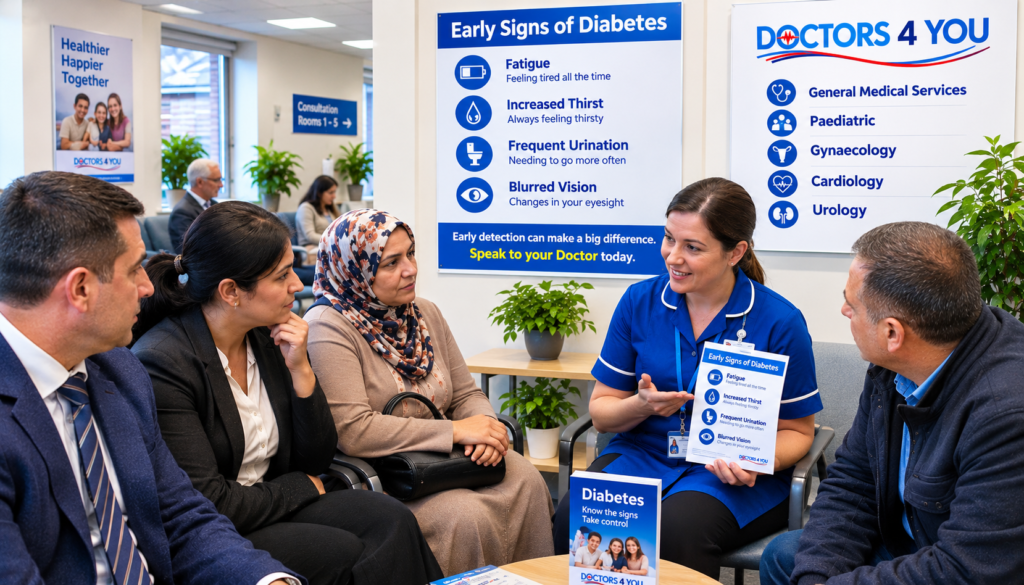
Your health starts with knowing how your body uses energy. Diabetes occurs when blood glucose becomes too high because the body lacks insulin or cannot use it well. Recognising the Early Signs of Diabetes helps protect your long-term wellbeing.
Many diabetes symptoms appear slowly, so daily routines can make them easy to miss. You may feel unusually thirsty or need the toilet more often than usual. These common signs of high blood sugar show that your body needs attention.
Noticing early diabetes symptoms need not cause alarm, but discuss them with a qualified healthcare professional. Timely advice supports accurate diagnosis, a personalised care plan, and informed future health decisions. Whether you worry about yourself or a family member, our team offers the evidence-based guidance you need.
Early Signs of Diabetes to Look Out For
Persistent changes in your daily habits may relate to your blood glucose levels. These signs do not confirm diabetes, but they show that your body may need professional assessment.
Common symptoms in adults
When considering type 2 diabetes symptoms, adults often notice physical changes that develop slowly. You may feel unusually tired or lose weight without trying.
Common indicators include:
- A persistent feeling of excessive thirst.
- The need to pass urine much more frequently than usual, especially at night.
- Unexplained tiredness or a lack of energy throughout the day.
- Slow-healing cuts or wounds.
Symptoms in children and young people
It is important to know that diabetes symptoms in children can appear more suddenly than in adults. These signs may develop within a few weeks, especially with type 1 diabetes symptoms.
Parents should watch for extreme thirst, sudden weight loss, or unusual tiredness. Bedwetting again after staying dry can be a warning sign. Arrange a prompt visit to a medical doctor or paediatric specialist.
Why increased thirst, urination and tiredness can occur
These changes often result from how your body processes glucose. When blood sugar stays high, your kidneys work harder to filter extra glucose from your blood.
When they cannot keep up, extra sugar passes into your urine and draws fluids from your tissues. This causes frequent urination and thirst as your body replaces lost fluids. Dehydration and poor glucose use for energy can then cause serious tiredness.
Less obvious signs, including blurred vision and recurring infections
Sometimes, less specific symptoms are easy to dismiss. For example, high blood sugar can swell the lens inside your eye, causing blurred vision.
You may also have recurring infections, such as thrush or skin problems, which thrive when glucose levels are high. If these changes appear suddenly or continue, arrange a medical assessment to discuss your concerns with a healthcare professional.
What Causes Diabetes and Who Is at Higher Risk?
Diabetes is common, but diabetes causes vary between people. Understanding these differences is essential for managing health and long-term wellbeing.
How type 1, type 2 and gestational diabetes differ
Type 1 diabetes occurs when the body’s immune system attacks insulin-producing cells in the pancreas. This autoimmune reaction is not caused by lifestyle choices.
By contrast, type 2 diabetes develops when the body makes too little insulin or cells stop responding properly. Gestational diabetes develops during pregnancy and usually ends after birth, but it needs careful monitoring.
You may also hear the term prediabetes. This means blood glucose is above the normal range, but not high enough for diabetes.
Risk factors linked with type 2 diabetes
Several diabetes risk factors can raise the chance of type 2 diabetes. These include being over 40, having a family history, or living with high blood pressure.
Weight and ethnicity also affect your overall risk. Previous gestational diabetes can raise your chance of type 2 diabetes later in life.
These factors are not personal failings. They suggest you should be more proactive with health screenings.
When symptoms may need assessment through Paediatrics or General Medical Services
If symptoms persist, seek professional guidance. Children and adolescents should see Paediatrics specialists for age-appropriate care.
Adults should start their assessment through General Medical Services. Your GP can use simple blood tests to check for prediabetes or confirm diabetes.
Understanding diabetes causes early allows timely action. Working with your healthcare team can help manage your health and reduce how these diabetes risk factors affect daily life.
How Diabetes Is Diagnosed and Treated
Moving from first tests to a personalised treatment plan follows clear steps that support your long-term health. At your appointment, a healthcare professional reviews your symptoms and medical history to choose the best next step.
Blood tests used to confirm diabetes
A formal diabetes diagnosis depends on specific laboratory tests. These tests show how your body handles sugar and give a clear view of your metabolic health.
HbA1c, blood glucose and other tests
The HbA1c test measures your average blood sugar levels over the past two to three months. It shows your long-term glucose control, rather than one reading.
Alternatively, a blood glucose test may check your current sugar levels. This could be a fasting plasma glucose test or an oral glucose tolerance test, depending on your clinical needs.
What to expect after a diagnosis
Receiving a diagnosis often begins a partnership with your medical team. You can expect a full assessment, helping tailor your care plan to your needs.
Your healthcare team will usually focus on these areas:
- Education: Learning how to manage your condition effectively.
- Monitoring: Regular checks of your cardiovascular and kidney health.
- Screening: Routine assessments for eye and foot health to prevent complications.
Treatment options, including lifestyle changes and medicines
Effective diabetes treatment depends on your diabetes type, overall health, and personal circumstances. Your doctor will create a plan that suits your daily life.
Lifestyle modifications often form the foundation of your care. These may include balanced nutritional changes and regular physical activity to steady your glucose levels.
When lifestyle changes are not enough, your doctor may prescribe medicines. These treatments can help your body use insulin more effectively or safely lower blood sugar.
Diabetes during pregnancy and the role of the Gynaecology Service
If diabetes develops during pregnancy, you will receive specialised, coordinated care. Your maternity team may work closely with the Gynaecology Service to support you and your baby.
Your medical team will monitor your health throughout pregnancy. They will adjust your diabetes treatment as needed to maintain safe glucose levels and provide expert guidance.
When to Seek Medical Advice About Possible Diabetes
Recognising early health changes helps protect your long-term wellbeing. Arrange an appointment with General Medical Services if you notice persistent thirst, frequent urination, unexplained weight loss, or unusual tiredness.
Knowing when to seek medical advice for diabetes supports prompt assessment. Early diagnosis supports management strategies that reduce the risk of long-term diabetes complications affecting your eyes, kidneys, nerves, and heart.
Some situations require immediate attention. Treat vomiting, abdominal pain, confusion, or severe dehydration as signs of a potential diabetes medical emergency. These may indicate diabetic ketoacidosis symptoms, requiring urgent clinical intervention.
Do not delay contacting emergency services if you or a family member experience these severe symptoms. Quick action saves lives and provides the care needed to stabilise your condition. Your health remains a priority, and our team is here to support your journey towards better management and understanding.
FAQ
What are the most common early symptoms of diabetes to look out for?
The most common signs are feeling excessively thirsty (polydipsia), needing to urinate more often than usual, and feeling persistently tired. You may also have unexplained weight loss, blurred vision, or recurring infections, including skin infections, oral thrush, and vaginal thrush. These symptoms happen because your body tries to remove excess glucose through the kidneys, causing dehydration and fatigue.
What is the difference between Type 1 and Type 2 diabetes?
A: Type 1 diabetes is an autoimmune condition: the pancreas produces little to no insulin. It often develops quickly, especially in children or young adults.Type 2 diabetes occurs when the body resists insulin or produces too little. It is more common with age, weight, and family history. Symptoms often develop gradually over several years.
What does it mean if I am told I have prediabetes?
A: Prediabetes means your blood glucose levels are above normal but below the threshold for a Type 2 diabetes diagnosis. This is a key time to act. Informed lifestyle changes can often prevent or delay this chronic condition. Our General Medical Services can monitor these levels and provide a structured health plan.
How is diabetes officially diagnosed by healthcare professionals?
Diagnosis usually involves a blood test called an HbA1c test. It measures average blood sugar levels over the previous two to three months. A fasting glucose test or glucose tolerance test may also be needed, helping us choose suitable treatment for you.
What support is available for diabetes during pregnancy?
If you develop gestational diabetes, our Gynaecology Service and maternity specialists will provide coordinated care. This includes regular blood glucose checks, nutritional guidance, and foetal wellbeing checks for a healthy pregnancy and delivery. Gestational diabetes often resolves after birth but can increase your risk of Type 2 diabetes later.